
Introduction
It’s one of those everyday mysteries that seems so obvious you almost never question it—until you do. Why are pizzas round, but the boxes they come in are square? And why are the slices triangular?
At first glance, it might seem like a design inconsistency or even a flaw. Wouldn’t it make more sense for everything to match? A round pizza in a round box, cut into square slices? Yet, the current system has remained unchanged for decades across the world.
The answer lies in a fascinating combination of geometry, economics, manufacturing efficiency, and tradition. What looks like a mismatch is actually a highly optimized system shaped by practicality.
Why Are Pizzas Round?
The round shape of pizzas dates back to their origins. Traditional pizza, especially from Naples, was shaped by hand.
The Art of Dough Making
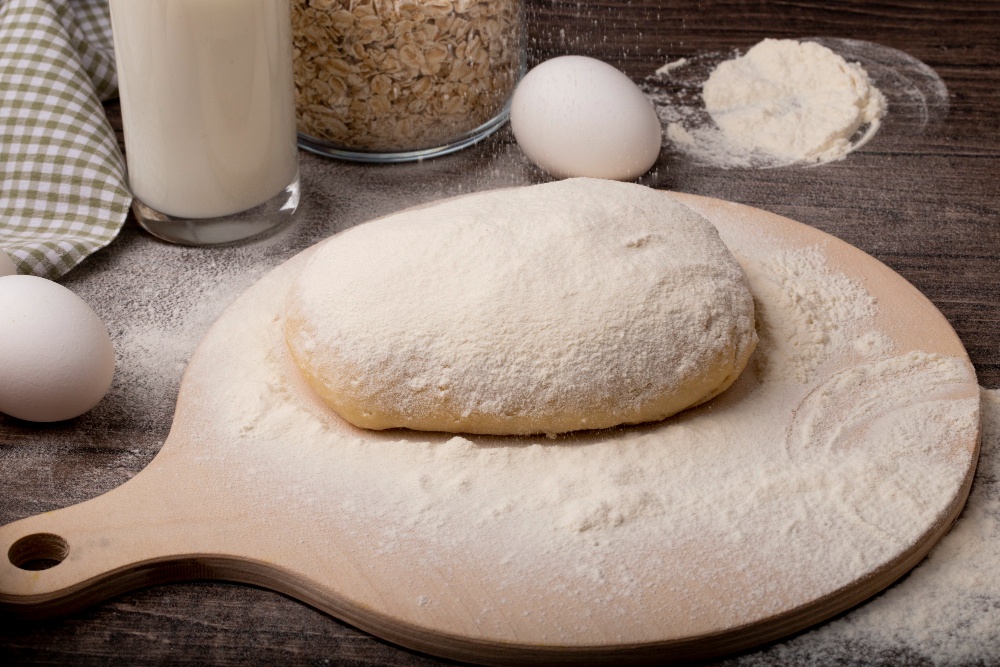
When pizza dough is prepared, it starts as a ball. As it’s stretched and tossed, it naturally forms a circle. This happens because:
- The dough is rotated evenly in all directions.
- Gravity pulls the dough outward symmetrically.
- Circular motion distributes tension uniformly.
Trying to make a square pizza by hand is actually much harder. It requires pressing and shaping, which can affect the texture and consistency.
Even Cooking
A round pizza also cooks more evenly in traditional ovens, especially wood-fired ones. Heat radiates outward in a circular pattern, making a round shape ideal for:
- Consistent crust thickness
- Even distribution of toppings
- Balanced cooking time
So, the round pizza isn’t just tradition—it’s physics and practicality working together.
Why Not Make Pizzas Square Instead?
Some places do make square pizzas (like Sicilian-style), but round pizzas dominate globally for a few reasons:
- Ease of preparation: Round is faster and more natural when working with dough.
- Tradition: The classic image of pizza is tied to its round shape.
- Portioning: Cutting into equal triangular slices is easier from a circle.
Square pizzas exist, but they are often baked in trays rather than hand-tossed, which changes the entire process.
Why Are Pizza Boxes Square?
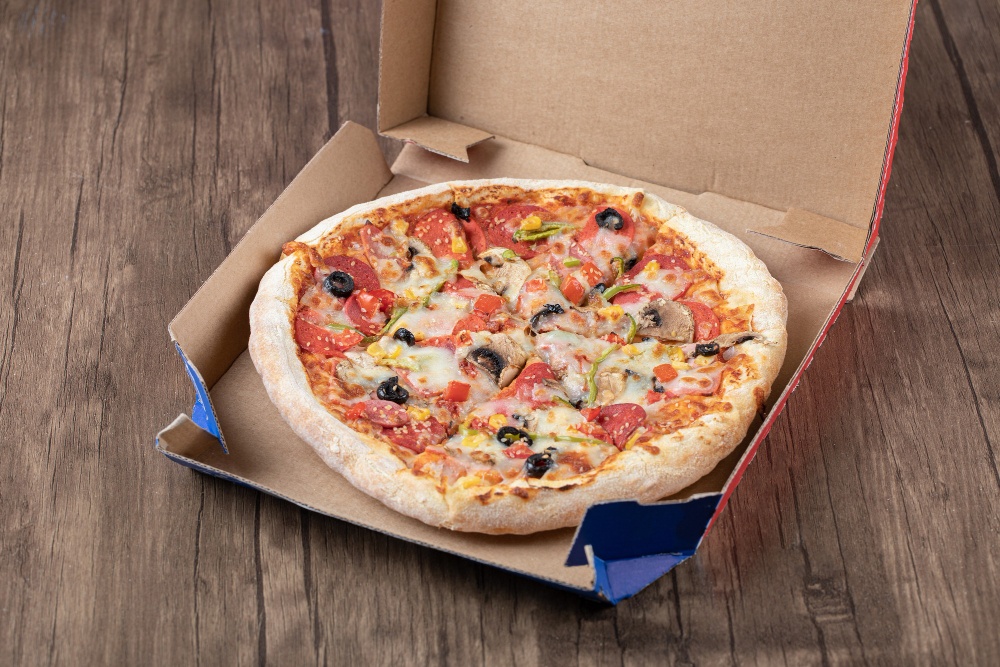
Now comes the interesting part: if pizzas are round, why not make round boxes?
Manufacturing Simplicity
Square boxes are significantly easier and cheaper to produce.
- They can be made from a single flat sheet of cardboard.
- Folding is straightforward and efficient.
- Machines can mass-produce them quickly.
Round boxes, on the other hand:
- Require more complex cutting and shaping.
- Waste more material.
- Are harder to stack and store.
In short, square boxes are a manufacturing dream.
Storage and Transport Efficiency
Square boxes are also much easier to handle in real-world scenarios.
Stacking
In restaurants and delivery operations:
- Square boxes stack perfectly without shifting.
- They maximize space in storage areas and delivery bags.
- They’re more stable during transport.
Round boxes would create gaps, waste space, and be harder to stack securely.
Delivery Logistics
Delivery drivers often carry multiple pizzas at once. Square boxes:
- Fit neatly into insulated bags.
- Don’t roll or shift during movement.
- Allow for better heat retention when stacked.
Efficiency here directly affects cost and customer satisfaction.
Ease of Use
Square boxes are also more user-friendly.
- They are easier to open and close.
- They provide space around the pizza for fingers, sauces, or crust.
- They allow for easier slicing adjustments if needed.
That extra space in the corners isn’t wasted—it’s practical.
Why Are Pizza Slices Triangular?
If the pizza is round, how do you divide it fairly? The answer is triangles.
Equal Portions
Cutting a circle into triangular slices ensures:
- Equal distribution of toppings
- Consistent portion sizes
- Easy sharing among groups
If you tried to cut a round pizza into squares, you’d end up with uneven pieces and wasted edges.
Structural Advantage
Triangular slices are also easier to hold:
- The crust acts as a handle.
- The tip points inward, concentrating toppings.
- It’s ergonomically efficient for eating.
Why Not Use Round Boxes Anyway?
It might still seem logical to match shapes. So why hasn’t the industry switched?
Cost vs Benefit
The benefits of round boxes are minimal:
- Slightly better fit
- Marginal aesthetic improvement
But the downsides are huge:
- Higher production cost
- More complex logistics
- Storage inefficiencies
In business, especially food delivery, margins matter. Even small cost increases can scale into massive expenses.
The Hidden Economics of Pizza Packaging
The pizza industry operates on tight margins. Every decision—from ingredients to packaging—is optimized.
Square boxes win because they are:
- Cheaper to produce
- Easier to store
- More efficient to transport
- Simple to assemble
Even a few cents saved per box can translate into millions of dollars globally.
Are There Exceptions?
Yes, some companies have experimented with alternatives:
- Octagonal boxes: Slightly closer to round but still stackable.
- Foldable trays: Used for fast food or individual servings.
- Reusable containers: In eco-friendly initiatives.
However, none have replaced the standard square box at scale.
A Perfect Example of Practical Design
The mismatch between round pizzas and square boxes is actually a perfect example of practical design over visual symmetry.
Each element is optimized for a different purpose:
- Pizza (round) → Best for cooking and preparation
- Slices (triangular) → Best for sharing and eating
- Box (square) → Best for manufacturing and logistics
What seems inconsistent is actually highly efficient.
Conclusion
The next time you open a pizza box, you’ll see it differently. That square box holding a round pizza isn’t a design mistake—it’s the result of decades of optimization.
From the physics of dough to the economics of packaging, every detail has been refined for efficiency, cost, and convenience.
Sometimes, the best solutions aren’t the most obvious ones. And in the case of pizza, the combination of round, square, and triangular shapes works together perfectly—delivering one of the world’s most beloved foods in the smartest way possible.