
The history of Mexican food represents a fascinating journey through centuries. Furthermore, UNESCO declared this culinary heritage an Intangible Cultural Heritage on November 16, 2010. Below, we explore pre-Hispanic roots, iconic dishes, and the science behind these flavors.
Origins in the history of Mexican food: Pre-Hispanic Roots and Milpa Technology
Mexican cuisine relies on the milpa, an advanced Mesoamerican system. In this system, corn, beans, and squash grow through a symbiotic relationship. Specifically, this term means mutual interdependence where each species helps others survive. For instance, corn supports beans, beans fix nitrogen, and squash retains soil moisture.
Additionally, a chemical process called nixtamalization transformed human nutrition. Historically, it began as a practical method to soften dry corn for easier grinding. Eventually, cooks discovered that adding wood ash or slaked lime (calcium hydroxide) triggered a vital chemical reaction. Consequently, it released niacin (vitamin B3), bioavailable calcium, and essential amino acids. To understand how this agricultural engineering shaped landscapes, read our article on The History of Chinampas: Hacking Geography with Aztec Grids.
Evolution within the history of Mexican food: Culinary Blending and Decentralized Markets
When the Spanish arrived in the sixteenth century, Old World ingredients merged with native items. As a result, complex flavors emerged, creating modern moles and antojitos. Traditionally, food distribution relied on efficient regional trade networks. To explore how these fresh produce exchange points function, visit our publication on The History of the Mexican Tianguis: Decentralized Markets.
The Universe of Tortillas: Types, Ingredients, and Nutrition
Tortillas serve as the fundamental pillar of Mexican tables. Moreover, they vary significantly by region, grain, and preparation:
- Nixtamalized Corn Tortilla: Made with corn dough, water, and lime. Thus, it offers fiber, calcium, and complex carbs. Typically, standard pieces contain 60 to 70 kilocalories.
- Wheat Flour Tortilla: Traditional to northern Mexico. It combines flour, water, fat, and salt. Due to lipids, calorie counts range from 90 to 110 per piece.
- Colored Tortillas: Crafted from blue, red, or dark yellow corn. Furthermore, they feature high concentrations of natural antioxidants called anthocyanins.
Emblematic Dishes and Global Recognition
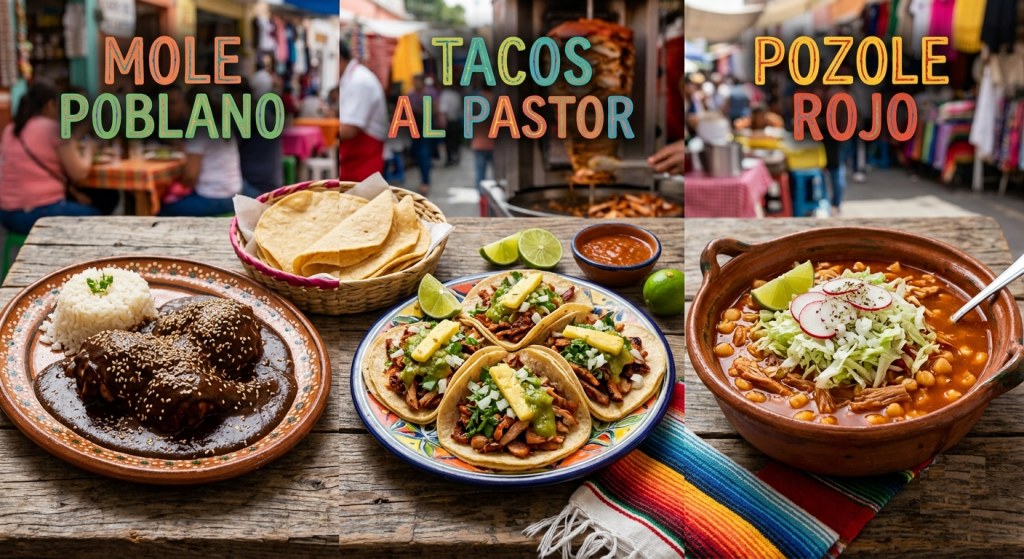
Mexican gastronomy features iconic dishes that require meticulous preparation and deep traditions:
- Tacos al Pastor and Guisado: The taco is a universal culinary format. Al pastor combines spit-roasted pork with achiote, reflecting Middle Eastern shawarma roots. Meanwhile, guisado tacos utilize traditional earthenware pots with classic home stews.
- Mole Poblano: A baroque masterpiece blending dried chilis, spices, nuts, seeds, and metate chocolate. Therefore, it requires hours of slow cooking to achieve its velvety texture.
- Traditional Pozole: A ceremonial broth made with large cacahuazintle corn kernels and pork or chicken. Finally, cooks season it with chilis, radishes, lettuce, and oregano.
To review official international protection criteria, check the records of the United Nations Educational, Scientific and Cultural Organization (UNESCO).