
Many passionate fans naturally believe that the roots of modern soccer firmly began in the green fields of England. However, the true historical origins of football stretch back thousands of years and span across entirely different continents. From the disciplined military camps of Ancient China to the sacred temples of Mesoamerica, the act of kicking a ball has always represented significantly more than just a competitive game. In addition, deeply understanding these ancient cultural roots helps us truly appreciate why the sport carries such immense emotional and social weight in the world today.
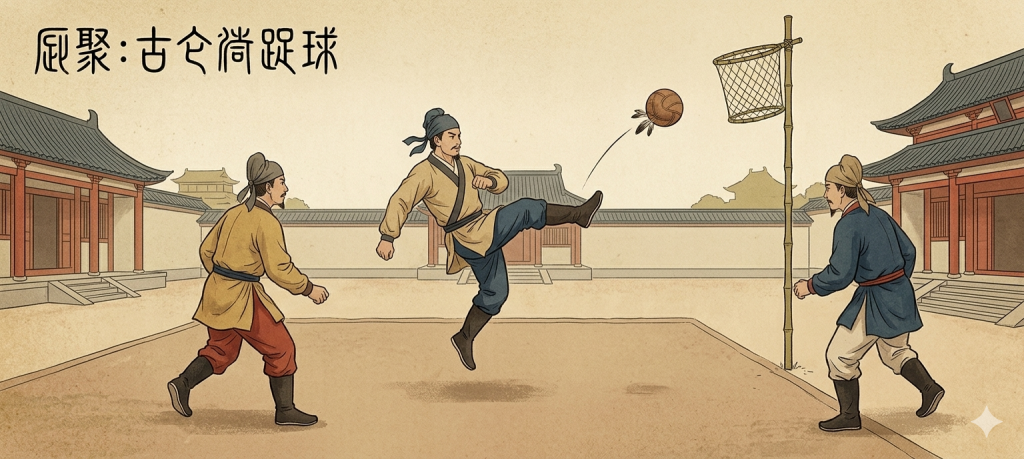
Cuju: The Historical Origins of Football in Asia
The FIFA organization now officially recognizes Cuju as the very oldest identifiable form of the sport. During the powerful Han Dynasty, specialized soldiers diligently used this game. It helped to remain in peak physical condition for battle. The historical origins of football in China involved a hand-stitched leather ball. This ball was tightly filled with feathers or soft fur. Furthermore, skilled players were strictly required to kick this ball through a remarkably small opening in a high net, all without ever using their hands or arms.
Much like the long technological evolution we observe in the History of the Toothbrush, which steadily advanced from simple chewing sticks to high-tech dental tools. Similarly Cuju dynamically transformed over time. It evolved from a rigorous military exercise into a widely popular form of royal entertainment. Eventually, professional teams and standardized leagues were formally established. This happened several centuries before the first clubs appeared in Europe.
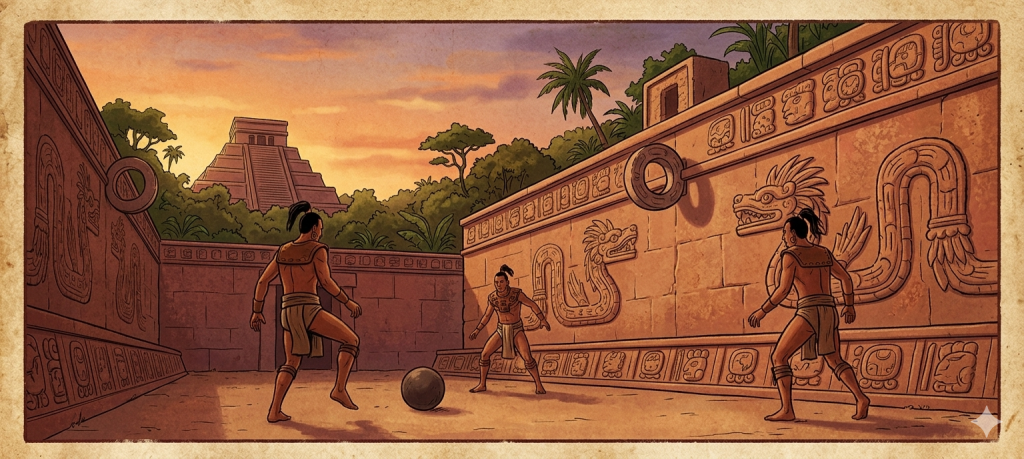
Sacred Ballgame Origins in Ancient Civilizations
Across the vast Atlantic Ocean, the historical origins of football took a considerably more spiritual and dramatic turn. In the regions of Mesoamerica, the highly advanced Maya and Aztec civilizations practiced a profound game widely known as Pitz or Ulama. For these cultures, this was not a casual hobby. It was a sacred, cosmic battle between light and darkness. Consequently, the heavy rubber ball represented the sun. The grand court symbolized the entire universe in microcosm.
Unlike the dynamics of modern soccer, dedicated players often expertly used their hips, elbows, and knees to keep the massive, solid rubber ball in a state of constant motion. This intense physical transition from complex ritual objects to the standardized sports equipment we see today remains a truly fascinating element of human progress and design. Humans always adapt tools for specific needs. We see a similar pattern in the history of keyboard designs. In both cases, function eventually found a perfect harmony.
Technical Aspects of the Mesoamerican Ball Game
To understand the historical origins of football in Mexico, we must examine the technical details of the Ulama. This game was absolutely central to the functioning of public life. It was a physical that enacted the creation of the world described in the Popol Vuh.
The Massive, Solid Rubber Ball
While players in many other parts of the world were using light bladders or stitched leather, the ancient people of Mexico created a remarkable piece of sports technology: the solid, vulcanized rubber ball.
- Weight: These balls were immensely heavy and solid, often weighing between 3 and 4 kilograms (6.6 to 8.8 lbs).
- Danger: These balls were dense and dangerous. A direct blow to the head or stomach could be fatal. Therefore, serious players always wore intricate, thick protectors made of hardened leather and wood, known as “yokes,” specifically to shield their hips and torso.
Rules and Victory: The Ring Challenge
The great courts often had a distinctive capital “I” shape. They featured high vertical side walls. A famous example still stands at Chichén Itzá.
- No Hand Contact: The foundational rule was simple. The heavy ball could never be touched by hands or feet. Players could only use their hips, knees, and elbows.
- Sudden Victory: Teams scored points by striking the walls. However, driving the ball through a stone ring meant an automatic win. This required nearly impossible skill. It was considered a clear sign of divine favor.
The Role of Sacred Sacrifice
The historical origins of football in this region often ended in a religious ritual. The match symbolized the movement of the stars. The rubber ball represented the sun journeying through the underworld. In addition, losing teams sometimes faced ritual sacrifice during festivals. Ancient cultures believed this blood offering was necessary to nourish the earth for the next harvest.
Ancient Sports Trivia
- Life and Death: You can verify the evidence of these rituals through records at the Smithsonian Institution.
- The First Golden Ball: Cuju players in the Han Dynasty achieved elite status. Exceptional players were honored by the Emperor. Some even received invitations to his table.
- Medieval “Mob Football”: In England, the game was pure chaos. Imagine 500 people moving a pig’s bladder through the streets. It was a riot masquerading as a sport.
- Royal Prohibitions: London authorities banned the game more than 30 times. Kings tried to outlaw it because youth ignored military archery practice to play.
The British Legacy and the Historical Origins of Football
As time passed, the historical origins of football shifted to Medieval England. These “mob football” matches were pure chaos. Hundreds of players from rival villages clashed at once. Therefore, British authorities standardized the rules in 1863. This was necessary to prevent total anarchy in busy cities.
This transition from chaos to order is a common theme in history. We see this pattern when we organize website information to avoid “thin content.” Just as the pioneers of the Football Association (FA) created universal rules, digital researchers must use validated data.
Final Thoughts on the Historical Origins of Football
Finally, looking back at the historical origins of football proves that the desire to play is universal. Whether it was a soldier in China or a priest in Mexico, the human spirit finds joy in the challenge of the ball. In addition, this ancient legacy continues today as we prepare for the FIFA World Cup 2026.
Specifically, cities like Seattle are already getting ready to host this global celebration. For instance, the energy at Lumen Field will be a modern echo of ancient cheers. Furthermore, this event reminds us that the sport’s roots are still alive. In conclusion, remember this tradition during the next match. You are participating in a story that is, in essence, as old as civilization itself.