
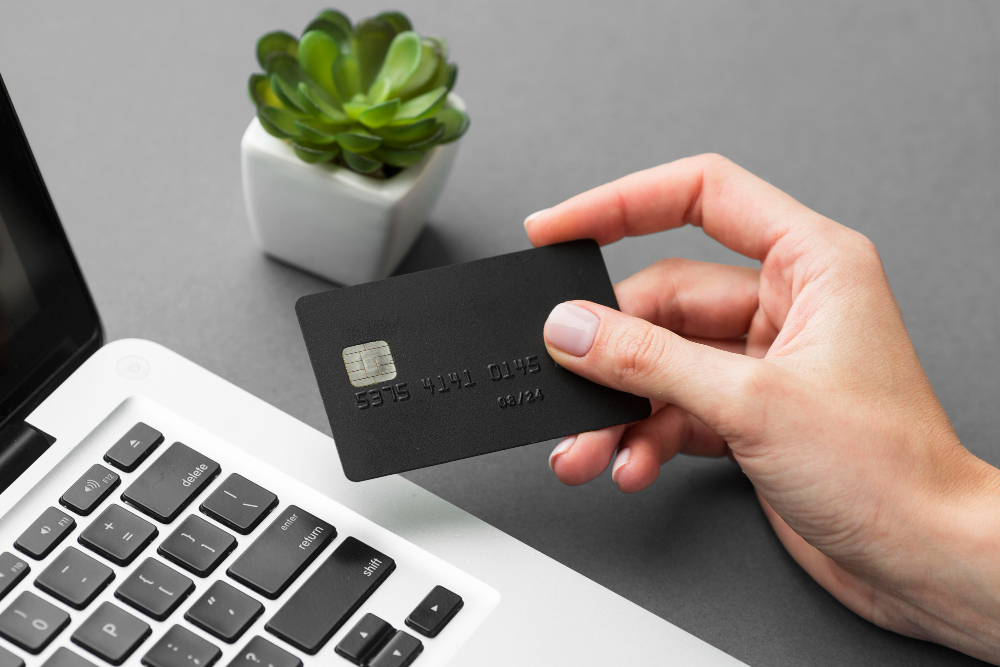
Introduction: The Plastic Revolution in Your Wallet
It’s hard to imagine a world without credit cards. These small plastic rectangles have fundamentally transformed how we spend, borrow, and manage money. From online shopping to emergency expenses, credit cards have become an essential financial tool for millions of Americans.
But the history of the credit card is relatively recent, spanning less than a century. What began as a simple solution to an embarrassing dinner problem evolved into a multi-trillion-dollar industry that powers the global economy.
Let’s explore the fascinating journey of how credit cards were invented, their evolution, and their impact on modern finance.
Before Credit Cards: Charge Plates and Store Credit
Credit wasn’t a new concept when credit cards arrived:
- In the early 1900s, department stores issued charge plates made of metal
- These allowed trusted customers to buy now and pay later at specific stores
- Oil companies like Mobil issued cards for fuel purchases in the 1920s
- Western Union introduced charge cards in 1914
However, these were limited to individual merchants and couldn’t be used universally.
1950: The Diners Club Card – A Forgotten Wallet Sparks Innovation
The modern credit card was born from an embarrassing moment:
- In 1949, businessman Frank McNamara forgot his wallet while dining in New York
- His wife had to bail him out, leaving him mortified
- This inspired him to create a card that could be used at multiple restaurants
- In February 1950, McNamara returned to the same restaurant with the first Diners Club Card
The Diners Club card was made of cardboard and could be used at 27 restaurants in New York. Within a year, it had 20,000 cardholders.
1958: The Birth of Bank Cards – BankAmericard and American Express
Two major developments happened in 1958:
- Bank of America launched the BankAmericard in Fresno, California
- It was the first successful credit card issued by a bank
- The program started by mailing 60,000 cards to Fresno residents (called a “drop”)
- American Express entered the market with a charge card made of plastic
The BankAmericard would eventually become Visa in 1976, now the world’s largest payment network.
The 1960s: Interbank Competition and Master Charge
Competition intensified as other banks wanted in:
- In 1966, a group of California banks formed the Interbank Card Association
- They created Master Charge to compete with BankAmericard
- Master Charge would later become Mastercard in 1979
- Banks began mass-mailing unsolicited credit cards to millions of Americans
This aggressive marketing led to fraud problems and was eventually banned by Congress in 1970.
The Magnetic Stripe Revolution – 1970s
A technological breakthrough changed everything:
- IBM engineer Forrest Parry invented the magnetic stripe in the late 1960s
- His wife suggested using a clothing iron to attach the stripe to the plastic card
- By the 1970s, magnetic stripes became standard on credit cards
- This allowed automated processing and reduced fraud
- The first ATMs appeared, giving cardholders 24/7 access to funds
Credit card processing became faster, cheaper, and more reliable.
The 1980s-90s: Rewards Programs and Premium Cards
Credit cards evolved from simple payment tools to lifestyle products:
- 1981: Discover Card launched with the first cashback rewards program
- 1987: First airline miles credit card (Citibank AAdvantage card)
- 1999: American Express introduced the Centurion “Black Card” for ultra-wealthy clients
- Annual fees became common for premium cards offering perks
- Balance transfers and introductory 0% APR offers emerged
Credit cards became status symbols as much as payment methods.
The Internet Age: Online Shopping and Security Challenges
The rise of e-commerce transformed credit card usage:
- Amazon (1995) and eBay (1995) made online shopping mainstream
- Credit cards became the primary payment method for internet purchases
- Security concerns led to innovations like CVV codes (1995)
- PayPal (1998) emerged as an intermediary to protect card information
- The EMV chip standard was adopted globally in the 2000s
The U.S. was slow to adopt chip technology, finally mandating it in 2015.
Modern Era: Contactless, Mobile, and Virtual Cards
Today’s credit cards are barely recognizable from their ancestors:
- Contactless payments (tap-to-pay) became standard in the 2010s
- Apple Pay (2014) and Google Pay (2015) digitized credit cards on smartphones
- Virtual card numbers provide enhanced security for online shopping
- Metal cards became status symbols (Chase Sapphire Reserve, Amex Platinum)
- AI-powered fraud detection prevents billions in losses annually
- Buy Now, Pay Later services like Affirm challenge traditional credit
Americans hold an average of 3.84 credit cards per person.
The Credit Card Industry Today
The numbers are staggering:
- There are approximately 1.06 billion credit cards in circulation in the U.S.
- Total credit card debt exceeds $1 trillion
- The average credit card interest rate is around 20-24% APR
- $4.6 trillion in annual credit card transactions in the U.S.
- Visa and Mastercard control over 80% of the global market
Interesting Credit Card Facts
- The first purchase with a credit card was for $1.00 at a lunch counter
- Early credit cards were made of paper or celluloid, not plastic
- The average American household has $6,270 in credit card debt
- Credit card companies make money three ways: interest, fees, and merchant charges
- The word “credit” comes from the Latin “credere,” meaning “to trust”
- Amex Black Card reportedly requires $250,000+ annual spending to qualify
- Over 70% of Americans have at least one credit card
The Future of Credit Cards
What’s next for this financial tool?
- Biometric cards with built-in fingerprint scanners
- Cryptocurrency integration allowing direct spending from digital wallets
- Invisible payments through wearable devices
- AI-powered spending advisors built into card apps
- Potential decline of physical cards as digital wallets dominate
Conclusion: From Embarrassment to Empire
The history of the credit card shows how a simple idea can revolutionize global commerce. What started as Frank McNamara’s solution to a forgotten wallet has grown into a multi-trillion-dollar industry that touches nearly every aspect of modern life.
Credit cards have democratized access to credit, enabled global commerce, and fundamentally changed consumer behavior. They’ve made life more convenient while also creating challenges around debt and financial literacy.
The next time you swipe, insert, or tap your credit card, remember you’re using a piece of financial innovation that’s less than 75 years old but has already transformed the world.