
Understanding the origin of HIV is essential for grasping how this virus evolved and why it remains a focus of modern medical science. Although we understand it better today, its history remains complex. In this article, we will explore the origin of HIV, the types of the virus, transmission methods, and current treatments in depth. Therefore, it is essential that we analyze this information with scientific rigor.
1. The Origin of HIV: From the Jungle to a Global Pandemic
To begin with, we must look toward Africa at the start of the 20th century. Scientifically, it has been confirmed that the virus jumped from primates to humans. Specifically, the virus originated from chimpanzees in Central Africa. This process, known as zoonosis, likely occurred due to contact with infected blood during hunting. Subsequently, the virus spread through trade networks and urbanization. From that point on, the virus began its silent expansion to the rest of the world.
2. Types of HIV and the Origin of HIV Variants
It is important to note that there are two main types of HIV: HIV-1 and HIV-2. First, HIV-1 is the most widespread type globally and is responsible for the vast majority of infections. This type is highly virulent and possesses a greater capacity for replication. Conversely, HIV-2 is much less common and tends to be found primarily in specific parts of West Africa. Although both destroy the immune system, HIV-2 is characterized by being less transmissible and progressing more slowly. Consequently, early diagnosis is essential for both types.
3. Forms of Contagion: Understanding Transmission
Many people still have questions about how the virus is transmitted. We must clarify that HIV is only transmitted through specific bodily fluids. These include blood, semen, rectal fluids, vaginal fluids, and breast milk. For example, unprotected sexual activity is the most frequent route. Likewise, sharing contaminated needles or syringes represents a very high risk. On the other hand, it is vital to remember that daily contact, such as hugging or sharing utensils, does not transmit the virus at all.
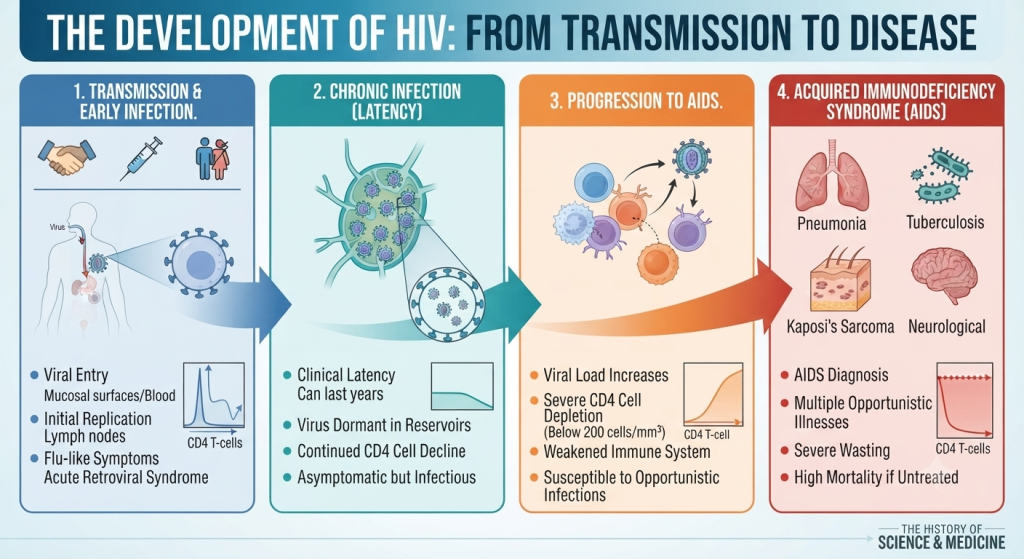
4. The Infection Cycle: What Happens in the Body?
When the virus enters the organism, it begins a direct attack on the immune system. More specifically, HIV targets CD4 T-lymphocyte cells. These CD4 T-lymphocytes are our body’s “soldiers” in charge of fighting infections. As the virus replicates, the count of CD4 cells decreases. Without treatment, the immune system becomes severely weakened. This allows for the appearance of what we call opportunistic infections. Therefore, treatment must begin as soon as possible after diagnosis.
5. Current Treatment: Revolutionizing the Origin of HIV Management
Fortunately, science has advanced in an extraordinary way. Currently, we have Antiretroviral Therapy (ART). This treatment does not cure the virus, but it reduces the viral load to undetectable levels. When a person becomes “undetectable,” they no longer transmit the virus to others. This reality is summarized by the phrase: “Undetectable Equals Untransmittable” (U=U).
Additionally, for prevention, we have PrEP (Pre-Exposure Prophylaxis). PrEP consists of taking a daily pill that contains antiretroviral medications. When taken correctly, it drastically reduces the risk of contracting HIV through sexual activity or the use of injectable drugs. To deepen your knowledge on how major illnesses have shaped medical history, we invite you to read our post on The History of Deadly Diseases: Evolution, Impact, and Global Challenges. Likewise, for validated technical information regarding treatment protocols, consult the resources of the National Library of Medicine (PubMed).
6. Myths and Realities: Breaking the Stigma
Despite medical advances, social stigma persists. Regrettably, many people live in fear due to misinformation. It is necessary to emphasize that HIV is no longer a death sentence. Nowadays, with proper treatment, someone living with HIV can have a life expectancy similar to any other person. Therefore, education is the best way to combat discrimination and unfounded fear.
7. Advances in Research: Are We Close to a Cure?
Currently, there are multiple lines of research underway. For example, scientists are studying gene editing to eliminate the virus from reservoir cells. Also, preventive vaccines are being developed that show promising results. Although the road is long, each discovery brings us closer to definitive solutions. Meanwhile, the focus remains on universal access to current treatments. Finally, we recommend consulting official sources such as the World Health Organization (WHO) for updated data.
8. Toward a Future Without New Infections
In conclusion, understanding the origin of HIV and its management is a collective duty. Thanks to decades of science, we have moved from an uncontrollable epidemic to a manageable chronic condition. However, prevention and diagnosis remain our best allies. Let us continue working for a world where information defeats stigma. Together, we can ensure that health is a right for all, regardless of serostatus.