
Understanding The Engineering of Movement
Everything begins in the most basic functional unit: the myofibril. These microscopic motors execute every command your body performs. The Engineering of Movement relies on actin and myosin proteins that slide past each other; when the brain sends an electrical signal, myosin pulls actin, which shortens the sarcomer.
The Stress Response: Damage, Repair, and the Time Factor
The body does not grow muscle by divine design; it builds muscle as a response to system failure. The damage-repair cycle serves as your body’s update protocol, which is fundamental to The Engineering of Movement. Following mechanical stress, the muscle initiates an inflammatory phase to remove damaged tissue.
However, many people ignore repair time, which acts as a critical variable in The Engineering of Movement. If you attempt to reinstall the system without completing the recovery phase—which takes 24 to 72 hours depending on intensity—you interrupt the cycle and trigger degradation instead of construction. Your body seeks homeostasis—a state of dynamic balance where all bodily functions operate optimally—after stress to ensure it can survive a similar load in the future. For more on how we manage internal systems, see my post on The History of AI.
The Messaging System: Myokines and The Engineering of Movement
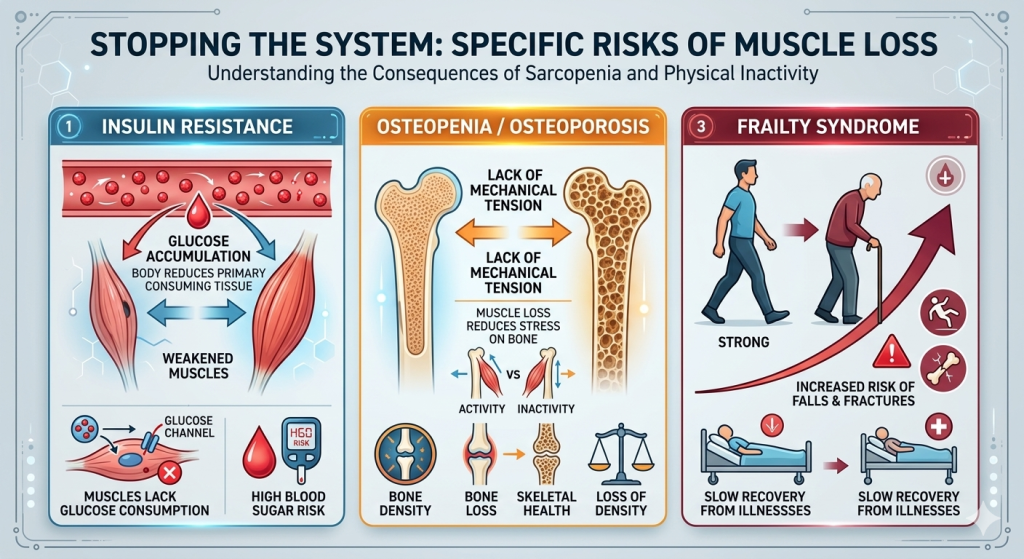
Muscle acts as the largest endocrine organ in the body. Thanks to myokines, muscle tissue speaks to the brain and other organs. Muscles provide more than just aesthetic value; they serve as a structural support system, a metabolic regulator, and a protector of vital organs. Losing musculature (sarcopenia) not only weakens you; it harms your health severely by slowing your metabolism, decreasing insulin sensitivity, and increasing bone fragility. You can learn more about how we optimize systems in my analysis of The History of Vending Machines in Japan.
The “Memory” of the System: Persistent Source Code
Why does your body regain physical fitness so easily? Myonuclei provide the answer. When you train intensely, satellite cells fuse with the muscle fiber and donate their nuclei (myonuclei). These nuclei act as control centers that direct protein synthesis in larger areas of the fiber. Even if you lose volume, those myonuclei remain in the fiber as “persistent code,” which allows your protein synthesis capacity to outpace someone who starts from scratch. According to the World Health Organization, consistent physical activity is essential for maintaining this physiological functionality and preventing chronic diseases.
The Cost of Disuse: Conditions of Muscle Loss
When we stop using this system, muscle loss exposes us to specific conditions:
Tool or Design?
At the end of the day, I wonder: do we meticulously customize the human body as a tool, or are we simply prisoners of a biological design obsessed with energy efficiency? Biology prefers saving energy over maintaining “expensive” muscle tissue. By understanding The Engineering of Movement, we stop being spectators and become system administrators. Perhaps true freedom involves learning to hack our own biological limitations before the body erases the “code” due to lack of use.